
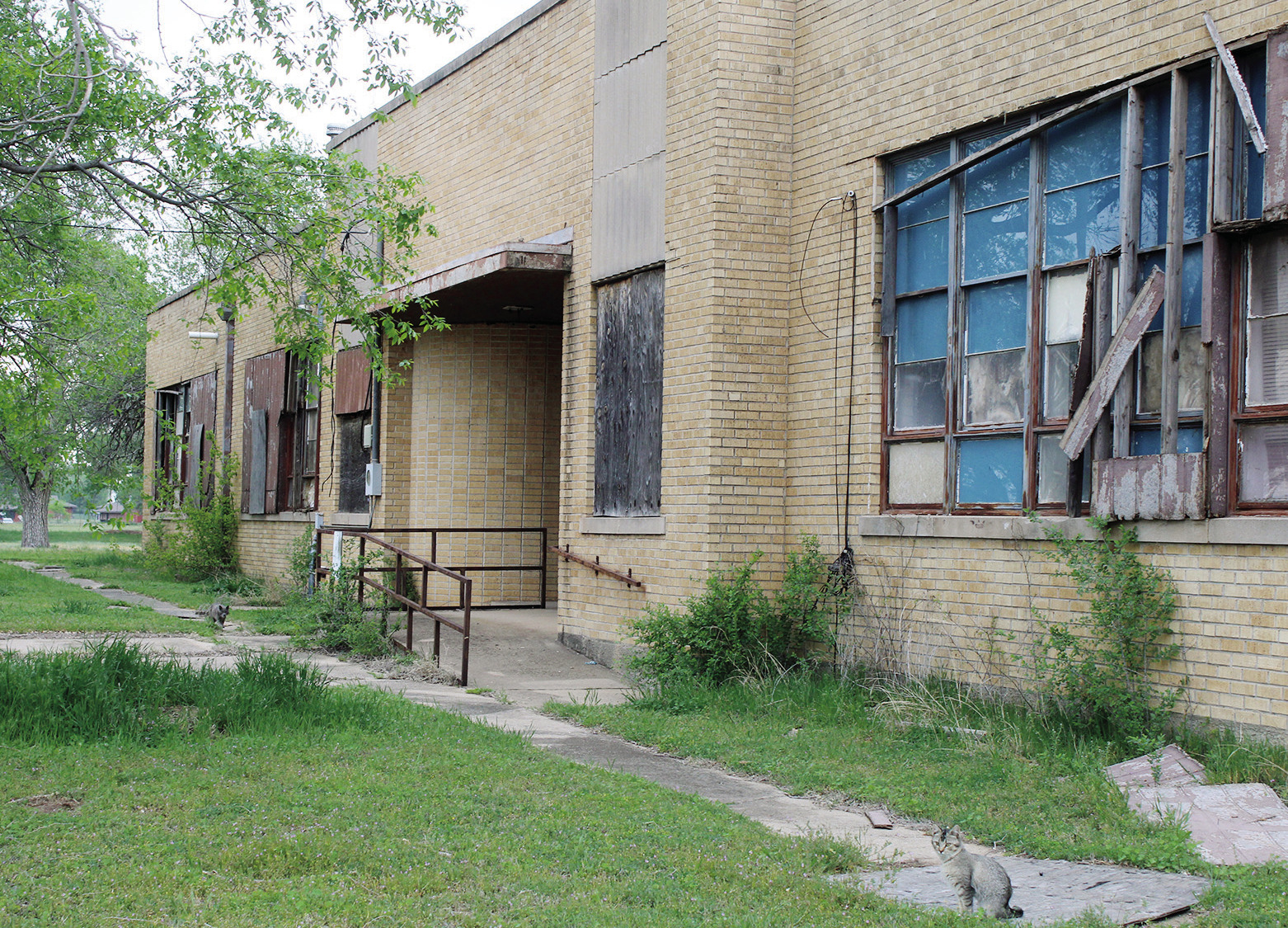
Only feral cats were active Tuesday at Dunbar High School in Watonga. Thursday they will have to find a new place to live when the derelict building is razed.
There is very little to be found about the history of the school. It was built in the early part of the 20th century when the Oklahoma Legislature mandated that separate schools be constructed for students of African descent.
It was named for Paul Laurence Dunbar, who Frederick Douglass called 'the most promising young colored man in America.”
Dunbar was born in 1872, in Ohio. His parents were former slaves from Kentucky, yet he became the leading African American poet in America and was popular abroad as well. He began working at the Library of Congress in 1897 but by 1906, with his health issues aggravated by the dust from the books, he died from tuberculosis. Multiple segregated Black schools were named for him; the best known is in Washington, D.C.
There are only three known Black schools in the state today, Rosenwald, in Lima, Booker T. Washington in Stillwater and perhaps Dunbar. The City of Stillwater is working to renovate Washington into a community space, funded by the donation of $250,000 from an anonymous source.
Dunbar won’t be so lucky. It was integrated into Watonga High School in 1956-57 as a result of the ruling of Brown vs Board of Education, which struck down the ‘separate but equal’ justification for segregated schools. The first Black graduates from Watonga High School were part of the class of 1957.
While the school remained open for a time after that and was used for various purposes, time has taken its toll. By observation, the roof is caved in multiple places, the walls and ceilings have collapsed from neglect and moisture and mold has infiltrated the entire space.
“We have exhausted all channels to revive, restore and preserve the building,” Dr. Dwight McGee, president of the Watonga School Board, said Monday night. He did say as a member of the Black community, the decision to demolish the old yellow brick school weighed heavily on him.
Board member Aaron Clewell wondered aloud if there was anything in the structure that could be repurposed and used in a commemorative way. However, the items that might have been useful were paper and have been ruined by moisture. The mold and the condition of the building also make undertaking a search unsafe.
McGee suggested the board appoint a committee from the community to research and design the monument the school district will erect on the site, rather than having the school board make the decisions.
Superintendent Kyle Hilterbran readily agreed.
“There is really nothing we can do about the building,” Hilterbran said. “But we can make the community safer and put up something nice.”
The demolition is expected to cost the school district $48,000.
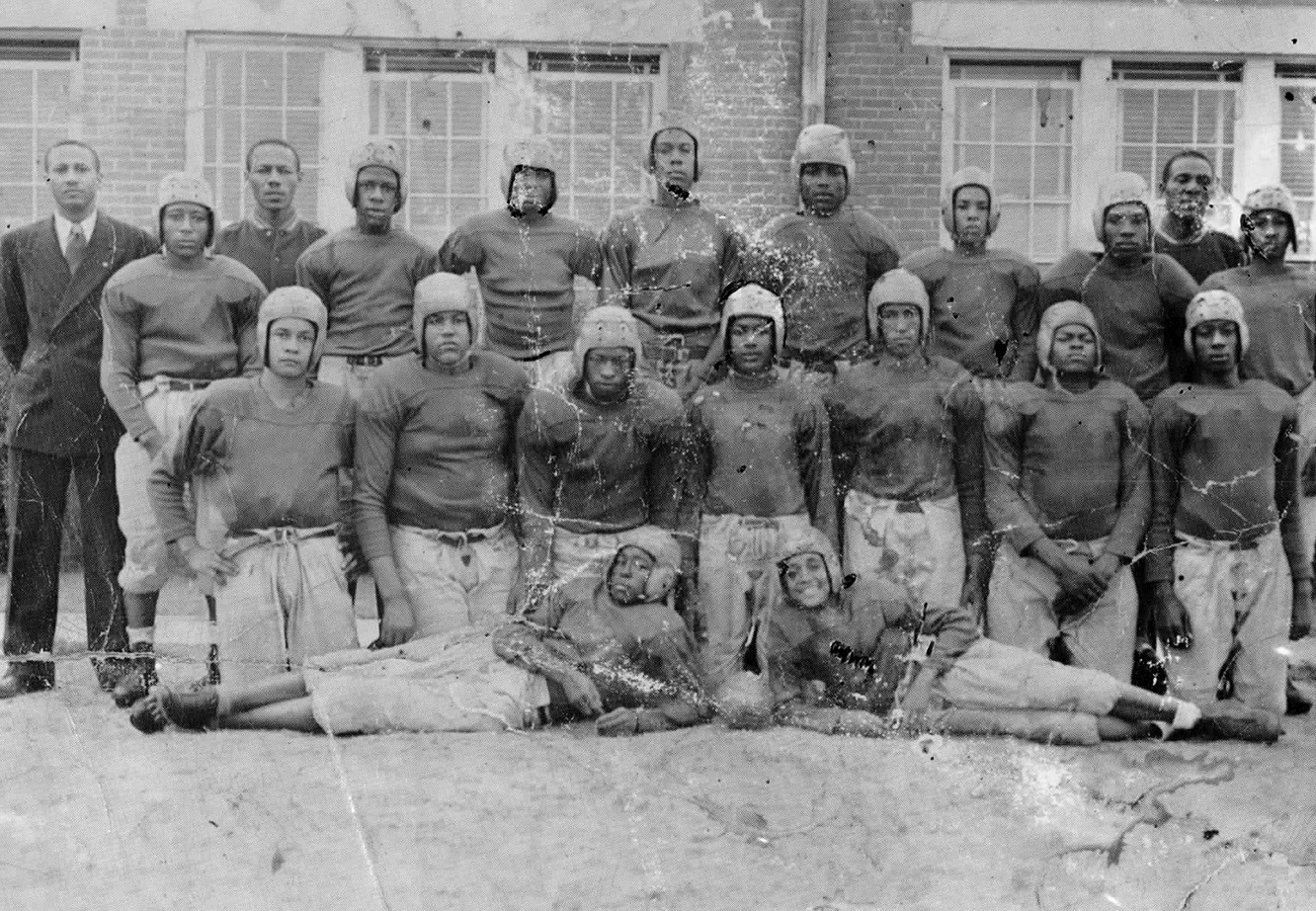
At Right: Dunbar High School formed its first football team in 1946. It played other all Black schools in those days of segregation. Dunbar beat Geary and Douglas twice and lost to Langston and El Reno twice.
Front: Lee Overton, end-running back. Donald Johnson, end.
Kneeling: Jerome Coleman, Conley Newman, Forrest Whitney, all tackles. Chester Downing, guard. Chester Whitney, tackle. Wilbur King, end.
Standing: E.V.D. Richardson, Principal. Herman Brown. Coach Oscar Berry. Elodis Bradford, tackle. Clarence Lyons, end. Lloyd Swanegan, guard. Theo Woulard, fullbackrunning back. Orlando Mewborn, quarterback. Joyce Himes, running back. Coach Booker (B.T.) Rouce. Dick Coleman.