
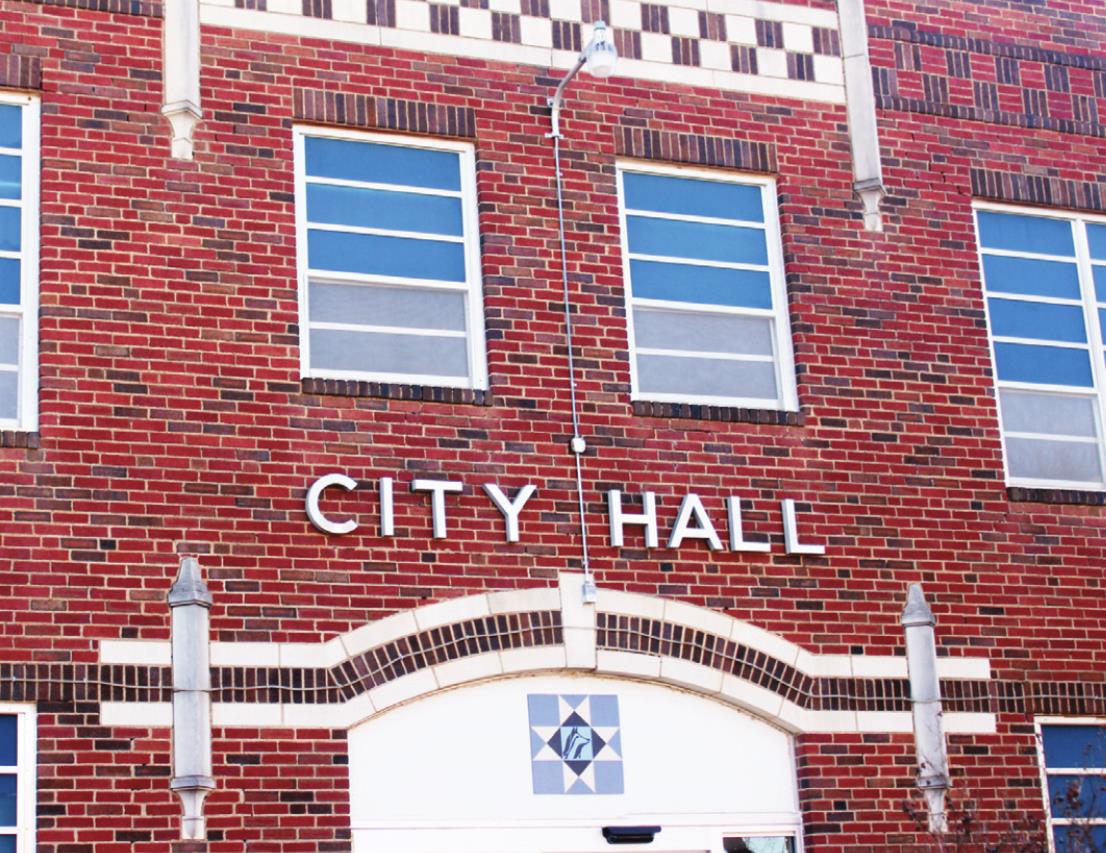
Watonga City Council met April 21 in as close to a regular session social distancing allowed. Mayor Gary Olsen and council members Julie Almaguer, Ryan Bruner, Allan Cowan, Lindsey Doyel and Mina Green were at the meeting, while councilmen Travis Bradt and Bill Seitter dialed in on a speaker app.
The city’s accountant, Dacia Phillips of R.S. Meacham CPA was also on speaker as she delivered the city financial reports. Those reports, which had figures through the end of March, showed average numbers, but Phillips warned the council sales tax revenue was in a steep decline and had been for more than six months. That warning also carried the prediction the budget would have to be amended before the end of the fiscal year to make the books balance.
Sales taxes going forward, Philips said, were down by 74 percent compared to one year ago and use tax is down 43 percent under the same comparison.
“We will have challenges in budgeting this year,” Phillips warned.
The council moved on to discussion of a resolution to declare a state of emergency, allow the city manager to employ certain powers, provide a temporary curfew, lower utility bill penalties and allow termination of the state of emergency.
The resolution replaces a mayor’s declaration issued in March but mirrors the state declaration and consolidates the two.
The utility penalties – fees on top of late bills – have been at 10 percent since 1953. City manager Larry Mitchell noted some customers who had payment arrangements were paying more in penalties than on the bill. He suggested it be dropped to 5 percent.
The contention on the resolution, though, was on the curfew, on adults abroad between 11 p.m. and 6 a.m. without essential reason.
Bruner asked if the curfew was to cut crime or because of the pandemic. Mitchell said council had asked for a curfew and Cowan said he thought it was Covid-related. Bruner thought a curfew based on stopping the virus spread would apply during the day and if it was to stop crime, the council should say that. “Let’s call it a crime prevention curfew, not a Covid curfew. It’s not being honest with the people.”
Seitter said the curfew was exactly what he was looking for, a tool for police officers to ask residents out after 11 p.m. to return home without penalty.
“People have said to me we are using Covid to do something else and I’m not sure a curfew will stop crime,” Bruner said.
When it came to a vote, Bruner was a ‘no’, while Almaguer, Doyel and Green abstained. As abstentions count as a ‘no’ vote, the resolution failed. Council then moved to amend the resolution, taking out all reference to curfew but passing the remainder, including the lower power bill penalty.
When the amended resolution came to a vote, Seitter was the lone ‘no’ and it passed handily.
Connie Burcham can be reached at Editor@WatongaRepublican.com