
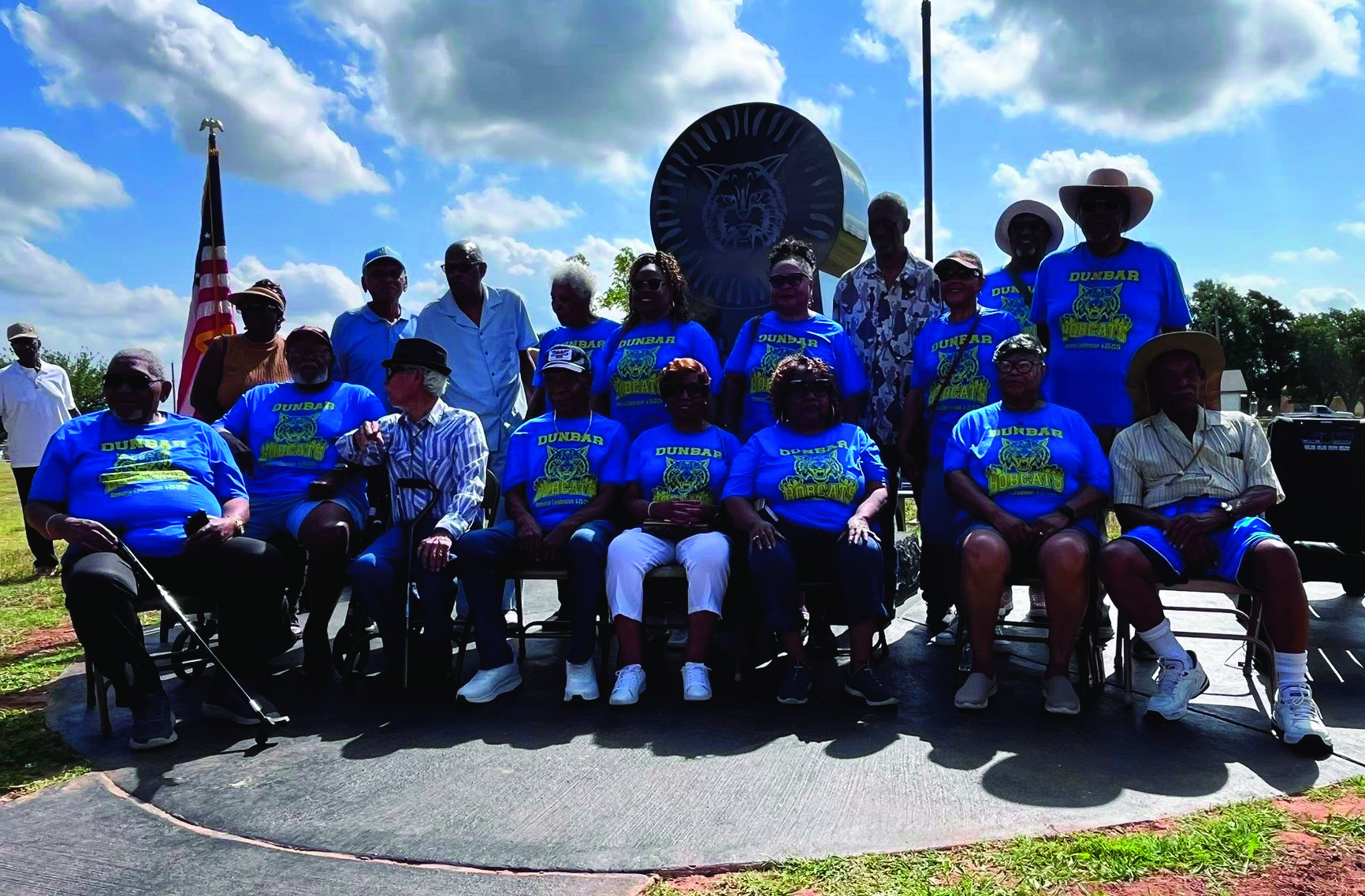
Saturday, the Dunbar School on the east side of Watonga near Legion Park was once again a place of laughter, memories and community. That was the day residents, former residents and members of the committee to commemorate the historically Black school came together for a celebration and to unveil the memorial.
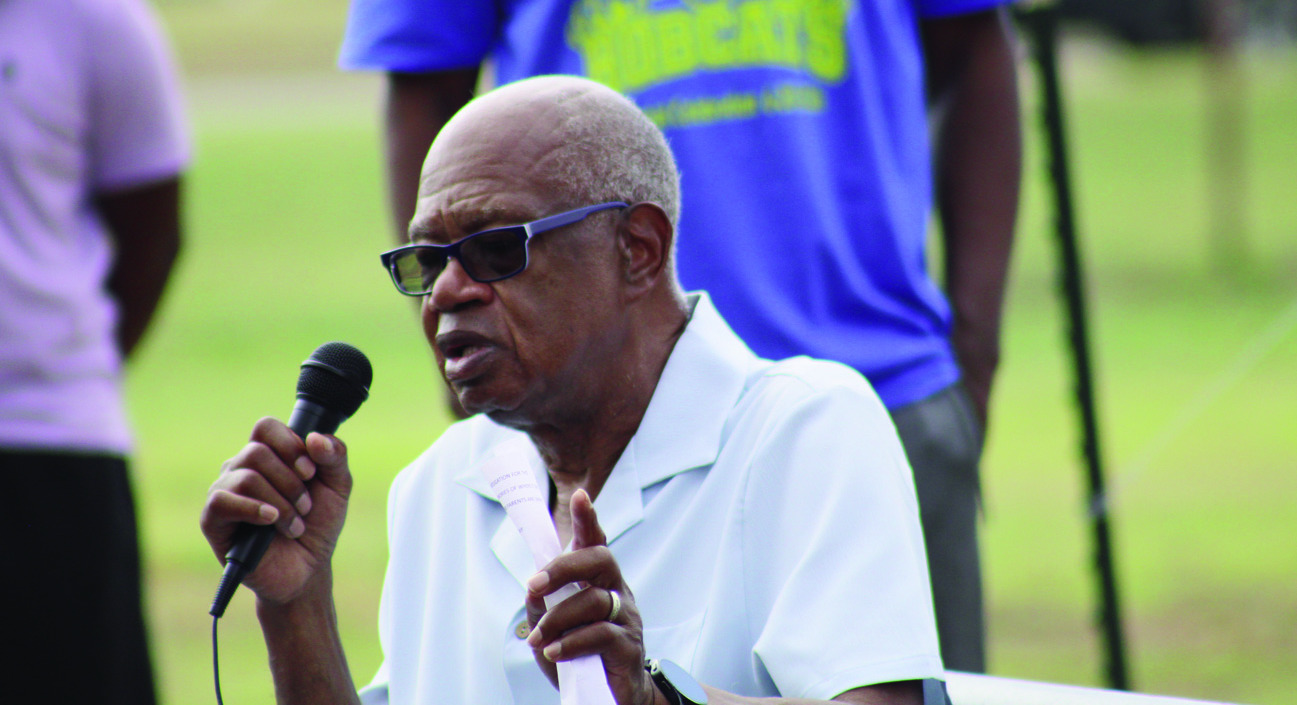
In opening remarks, pastor Carle King explained to the crowd that although the residents of Watonga – and America – came to this place many different ways, “We are all in the same boat now.” Dunbar was built in the early part of the 20 th century when the Oklahoma Legislature mandated that separate schools be constructed for students of African descent.
It was named for Paul Laurence Dunbar, who Frederick Douglass called ‘the most promising young colored man in America’.
It was integrated into Watonga High School in 1956-57 as a result of the ruling of Brown vs Board of Education, which struck down the ‘separate but equal’ justification for segregated schools. The first Black graduates from Watonga High School were part of the class of 1957.
While the school remained open for a time after that and was used for various purposes, time took its toll and the building was demolished in April 2023.
“We exhausted all channels to revive, restore andpreserve the building,” Dr. Dwight McGee, at the time the president of the Watonga School Board, said. He did say as a member of the Black community, the decision to demolish the old yellow brick school weighed heavily on him.
Many other residents, some who had attended school there or sent their children to early childhood education there, echoed the feeling that the demolition left a hole in their community and their hearts.
McGee spearheaded a committee to research and design the monument the school district erected on the site. Superintendent Kyle Hilterbran supported the project. “There is really nothing we can do about the building,” Hilterbran said when the decision to demolish it was made. “But we can make the community safer and put up something nice.”
The installation was further supported by the City of Watonga which helped with the electrical service and provides power for the lighting at no cost to the school district, which still owns the land.
The monument is a black granite obelisk, with images from the history of the school as well as names of teachers and students engraved on the sides.
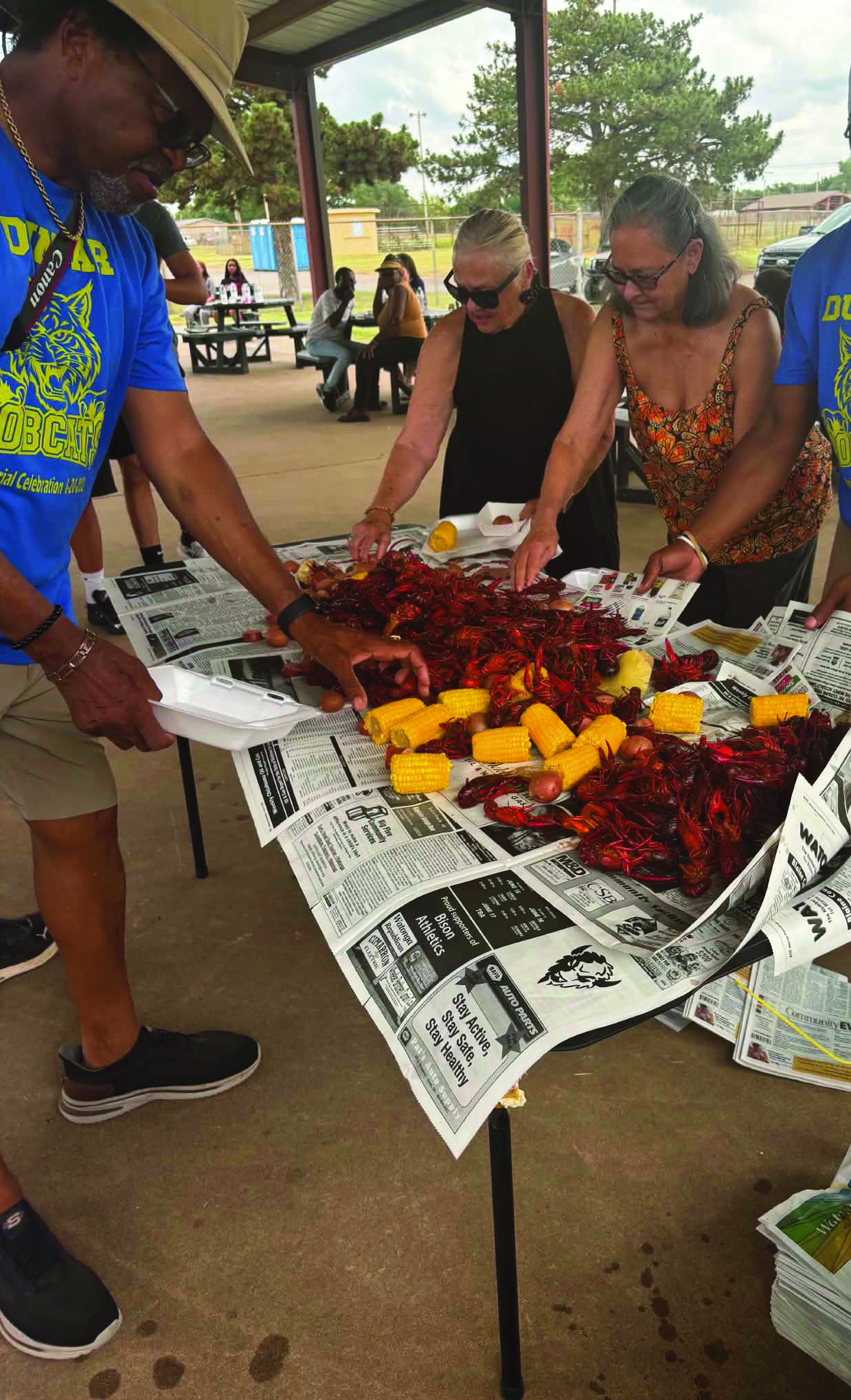
The celebration included fun, games and activities for children, a 3x3 basketball tourney and more food than the law allowed, the central dish being more than 200 pounds of crawfish cooked on site.
There were only three known historically Black public schools in the state when Dunbar was demolished, Rosenwald, in Lima; and Booker T. Washington in Stillwater. The City of Stillwater is renovating Washington into a community space, funded by the donation of $250,000 from an anonymous source.
The future for the land where Dunbar once stood is unclear. Some suggestions have been to create a community center there, or build a storm shelter there to house the eastern part of town in the instance of dangerous weather.
A huge Thank You to the organizers of this monumental event. Fun was had by all