
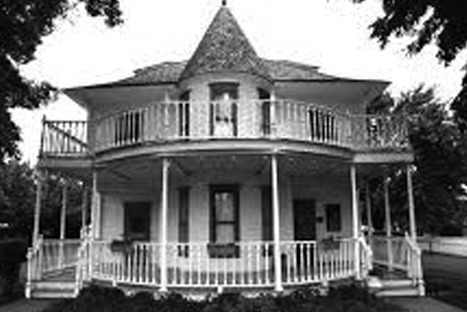
As we continue to celebrate African-American Heritage month, the Friends of the Ferguson Home invite you to an evening with Professor Roger Hardaway of Northwestern Oklahoma State University in Alva. He will present “Buffalo Soldiers,” the IX and X Cavalry made up of African Americans after the Civil War. Join us at 5:30 p.m. on Thursday, February 19 at the Watonga Public Library. Light refreshments will be served.
Continuing African-American Heritage month, we might consider the attitudes toward African-Americans in Edna Ferber’s 1930 book “ Cimarron”. RKO Studios purchased the rights for an astounding $125,000 and produced the Academy Award winning 1931 movie. In 1960, MGM produced a second version Wikipedia Edna Ferber. Edna Ferber, the daughter of Jewish immigrants, researched her book while staying with Mrs. Ferguson in the late 1920s in Watonga. Sabra, the heroine, is loosely modeled after Mrs. Ferguson and Yancey is modeled to some extent after T.B. Ferguson who had passed in 1921, though some say other aspects of Yancey are modeled after the flamboyant lawyer and son of Sam Houston, Temple Houston, who moved to Woodward in 1893.
Attitudes toward African Americans in Oklahoma have changed dramatically since the book and first movie were made. The book reflects attitudes in place at the 1893 land run in the Cheyenne-Arapaho reservation area and later. For many, the most racist character in the 1931 movie is Isaiah, a young black boy. His job is to swing a fan over the dinner table in the home of Sabra’s parents in Kansas. He hides in the wagon during the 1893 land run. While not much is written of this character at the time, today his characterization is painful to watch Cimarron movie 1931.
In the epic 1960 version of the movie starring Glenn Ford as Yancey Cravat, Maria Schell as Sabra Cravat and Anne Baxter as the “soiled dove” Dixie Lee, the Isaiah character is removed Wikipedia Cimarron 1960. This reflects changing attitudes toward civil rights. I recommend the review of the films Review of Forgotten Movies There is still plenty of racism toward Native Americans in both movies. Hunger for land that was unclaimed in western Oklahoma after Cheyenne-Arapaho adults each received an allotment of 160 acres fueled the 1893 run. In the films, Native Americans are mistreated by ruffians, and Yancey stands up for them. In the 1960 movie, a Native American family is attacked, and Yancey brings the widow and her baby into their home. When Yancey tries to enroll the child in public school, this is not allowed. Native Americans and African Americans went to different schools such as Dunbar in Watonga and the school at Canton. Today, we can be thankful for the integration and more equal rights and attitudes that have progressed over the past nearly 100 years.
The attitudes expressed toward both groups of people of color are a foreshadowing of the racism toward Hispanics at the center of Ferber’s later work, Giant, which of course went on to become the 1956 blockbuster starring Rock Hudson, Elizabeth Taylor and James Dean. It won an Oscar that year and was nominated for 10 others.