
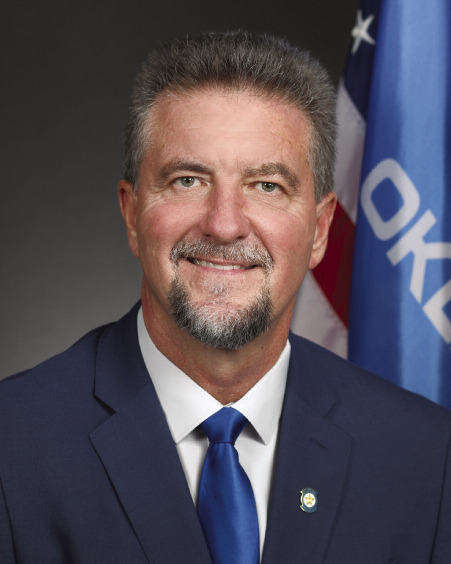
I have been appointed by the House speaker to serve as a member of the Energy Council. This national, bi-partisan legislative group is made up of members from 14 states as far ranging as Alaska and West Virginia and many southern states. Oklahoma was one of the five founding member states when the council formed in 1975. As chair of the House Utilities Committee and a member of the Committee on Energy and Natural Resources Oversight, I'm honored to get to serve in this role – to learn from other states and to share Oklahoma's energy successes and challenges.
Last week in the House Agriculture Committee, I passed House Bill 2162, which would create the Terry Peach Watershed Restoration Act. The act would build on House Bill 2239 enacted in 2023, which created a pilot program focused on the North Canadian watershed with the goal of exploring solutions to the infestation of red cedars and other invasive species. This new bill would expand the success of this program statewide, helping us eradicate these harmful trees and brush to better protect our state from wildfire danger and the drain on water and other precious resources.
In the House Utilities Committee, we passed House Bill 2155, which I authored. This would establish a process through the Oklahoma Corporation Commission to permit new renewable energy facilities. This would be similar to oil and gas permitting, in place for decades. It should not require additional staff or other resources, but should help improve local public notifications and transparency on these projects. Currently, we have minimal regulations for wind facilities and none for solar, so this just evens the playing field for all energy producers. We do have an amazing amount of energy in our state, and we are a net exporter of power. There are many companies looking to locate new facilities here. We want a uniform process for permitting and better public scrutiny of what is being placed where.
This is among the many pressing energy issues we have. Others include establishing appropriate setbacks on proposed new renewable wind, solar and battery storage projects; addressing eminent domain concerns on proposed transmission lines; and developing better behind-the-meter policies to power high energy consumers like hightech data centers and crypto mines.
This first week of the legislative session, the Legislature convened to hear the governor's annual State of the State address. There are many areas where lawmakers such as myself agree with the governor. One of those is continuing to look at how we can cut taxes for Oklahomans while protecting necessary state services. Last year, we cut the state's portion of the grocery tax – the largest tax cut in state history, and our economy remains strong. This year, we'll examine possible income tax cuts. But we'll do this with the knowledge that we must continue to adequately fund public services, especially our public schools, including much-needed health and therapy programs that assist so many of our students.
Please remember, if I can help you with something, do not hesitate to reach out. You also can follow regular updates on my House Facebook page or call or email anytime at (405) 557-7407 o r Mike.Dobrinski@okhous e.gov.
Mike Dobrinski serves District 59 in the Oklahoma House of Representatives. His district includes Dewey and parts of Blaine, Garfield, Kingfisher and Woodward counties.