
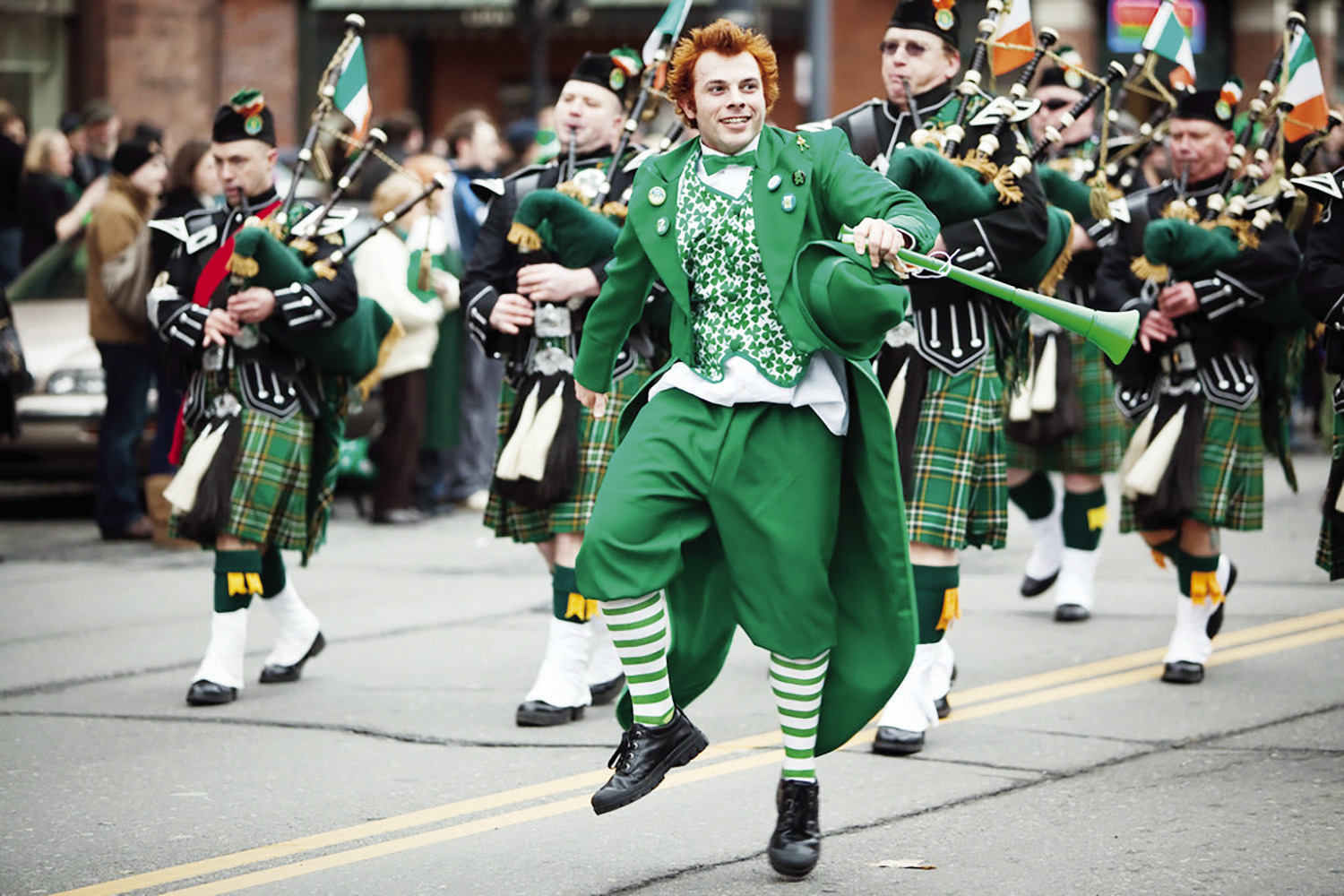
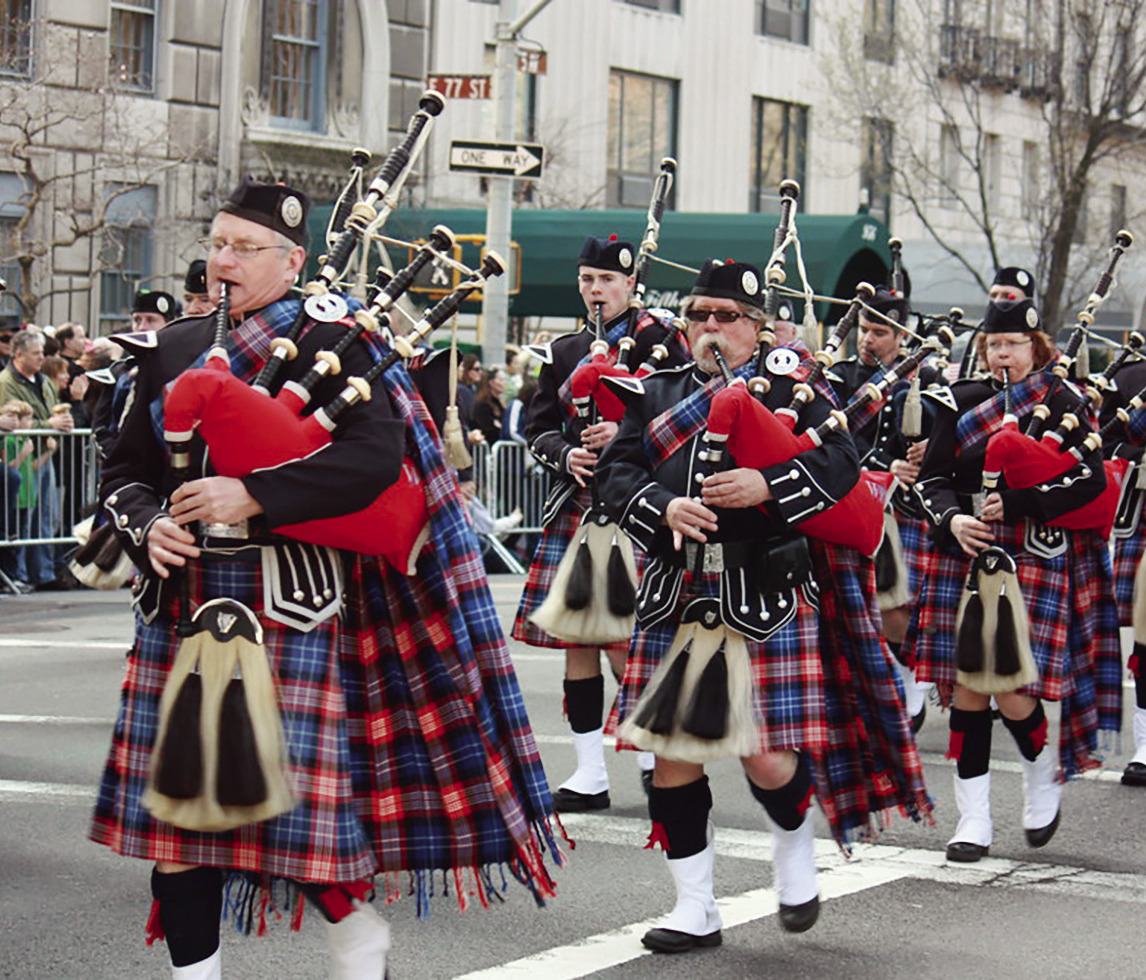
The Irish have celebrated St. Patrick’s Day for more than 1,000 years. It marks the anniversary of Patrick’s death in the fifth century.
But the celebration – more than 100 parades in the United States – is the culmination of a not-sooutstanding start. He was born in Britian, ruled at the time by the Roman Empire. At 16, he was kidnapped and taken to Ireland as a slave.
He escaped, but later went back to Ireland, where he is credited with spreading Christianity. According to legend, he explained the Holy Trinity using the three leaves of native Irish clover, or shamrock, to illustrate the Father, Son and Holy Ghost. Throughout his life he suffered extreme poverty and experienced persecution.
It is believed he died March 17, 461 at 76.
About the ninth or tenth century, the Catholic feast of St. Patrick began to be observed on March 17. The first parade, though, was held in 1601 in what is now St. Augustine, Florida. It was organized by the colony’s Irish vicar.
More than 100 years later, in 1772, homesick Irish soldiers serving in the British army in New York City marched to honor the patron saint of Ireland. The craze spread to Boston, Savannah and other American cities and has become an ingrained institution.
Irish patriotism from from American immigrants showed itself in the rise of Irish aid societies such as the Sons of St. Patrick and the Hibernian Society. Each would sponsor annual parades. The organizations united to hold one parade in New York in 1848 to hold the official parade. It is now recognized as the oldest civilian parade and the largest in the U.S., covering a mile and a half with more than 150,000 participants, in addition to the 3 million people who line the parade route.
Parades in Boston, Chicago, Philadelphia and Savannah each draw more than 10,000 participants, not counting the observers.
Before the potato famine in 1845, most Irish immigrants were Protestant and middle class. But that year when the famine hit, close to a million poor, illiterate Irish Catholics came to the U.S. to escape starvation.
It was not until 1948 when President Harry Truman attended the parade in New York, that the Irish, who had fought prejudice and stereotypes that portrayed them as violent drunkards began to experience a resurgence of pride in their heritage.