
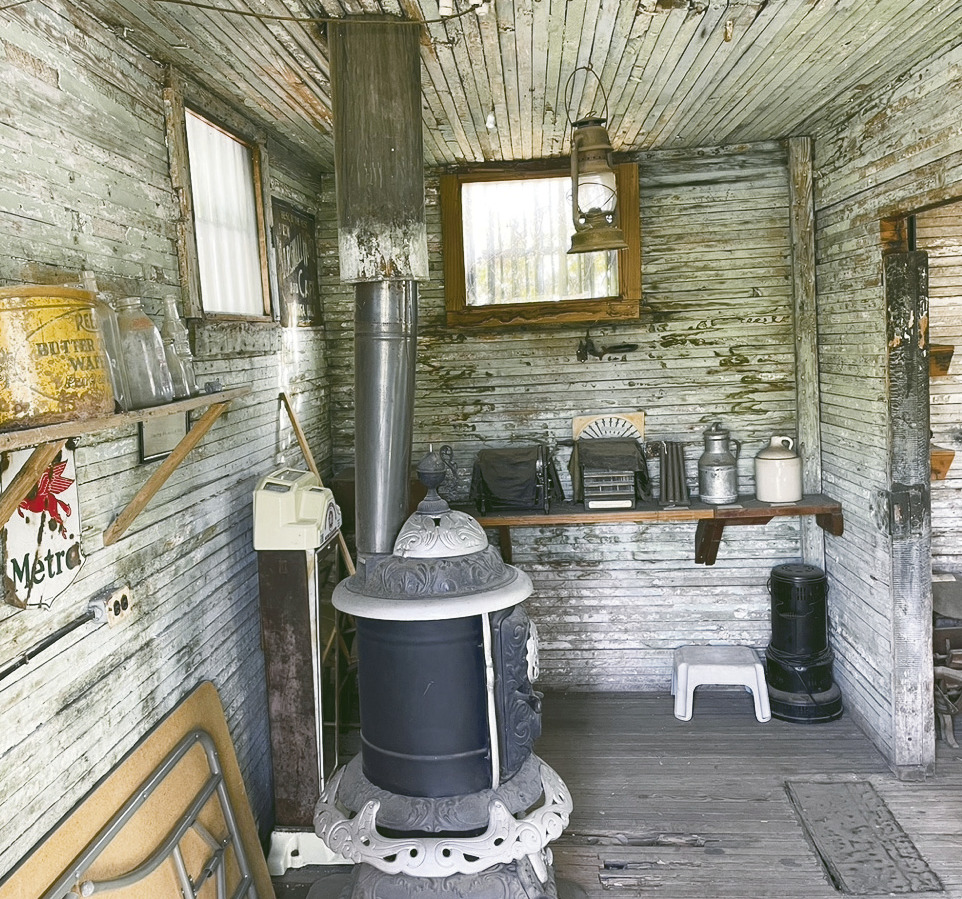
If you had one of only six similar structures in the state, you would want to showcase the building. Blaine County will do exactly that at 6 p.m. January 28 at the Watonga Public Library when Michael Mayes, the Oklahoma coordinator of the National Register of Historic Places presents his survey of the early tiny jails, or calabooses, of Oklahoma.
The survey included 105 sites but missed the tiny 1893 jail in Watonga. Mayes has been notified of the little hoosegow on Weigle Avenue and now includes it in his presentation. The original survey was completed with the assistance of the Oklahoma State Historic Preservation Office.
More than half of the jail sites surveyed in 2023 were either one- or two-room formed concrete builds. The remainder included 19 built of native stone, four wood framed, one iron clad, seven metal cells, 13 brick, block or clay tile and the rest -12- were not stand-alone buildings.
What makes the jail in Watonga unique is its stacked 2x4 construction.
“The few remaining wood-frame calabooses show similar build styles of 2”x4” sawmill lumber layered on top of each other. Metal bars typically fabricated by the local blacksmith allowed ventilation and reinforced door locks. Numerous newspaper articles point out one glaring fault of the wood calaboose though, which was its inability to withstand fires that prisoners started in attempts to escape the law,” the report reads.
With the planks placed on their narrow edge, they could also have been pried off from either inside or outside, drilled through or kicked and broken. The stacked construction, though, laid the boards on their wide sides, one on top of the other. The walls of the old Watonga jail are an estimated 18” thick in places, eliminating the chance of drilling through, prying off or kicking through to freedom. The floor and ceiling are made from stacked 2x6 boards.
There are only six known examples of this type of jail construction remaining in Oklahoma. Others, if there were any, remain undiscovered or have been the victim of fire or time.
Family lore has it that the two Pettis brothers who lived near Watonga built both the jail in town and the one in Geary, which is also of stacked 2x4 construction.
One reason the jail was left out of the original survey was insurance maps from 1901 were used as locators. It is unclear where the existing structure was at that time. It was moved from south of town to the site of the T.B. Ferguson Home Museum in 1969. It was sided and reroofed by 1970.
Perhaps one of the most fascinating facts about the little jail – which boasted two cells and space for the jail keeper – is the inmate registry still exists, chronicling the names, charges and sentences of the miscreants incarcerated there in the days when the West was still a lot wilder than it is today.
This interesting bit of history will also be on display at the library when Mayes gives his presentation. The book could verify or put to rest claims that great-uncle Harry was once arrested and charged with horse theft before he escaped from jail!
For more information on the upcoming free presentation, the jail in Watonga or the T.B. Ferguson Home Museum, go to tbfergusonhome. org or its Facebook page.