
A bill that would allow school board elections to be held in June and November has left its committee, House Elections and Ethics and can now be heard in the House Oversight Committee It was sponsored by Rep. Chris Banning, R-Bixby.
HB1151 would shift school board elections from the current February and April election dates. The measure also standardizes term lengths for board members by making both elementary district boards and independent district boards four-year terms, although Blaine County does not have separate boards.
School districts are mandated to cover the expenses of their board elections. In 2023, these elections totaled $16.8 million of taxpayer money that Banning, the bill’s sponsor, thinks could be more effectively invested in education.
“Aligning school board elections with legislative cycles makes sense for taxpayers and voters,” Banning said. “This change will increase turnout, save school districts millions, and ensure board members are elected in a way that better reflects community engagement.”
Banning said low voter turnout has also been an ongoing concern. In April 2024, just 146 people voted in the Union Public Schools Board election for Zone 4. He said moving these elections to larger election cycles will help increase engagement and ensure greater community representation in school board races.
Over on the Senate side of the Legislature, Sen. David Bullard, R-Durant, has secured initial approval for legislation to appropriate $500 million for local water and wastewater infrastructure projects.
Recently the Senate Energy Committee unanimously approved Senate Bill 92. This bill would make a one-time appropriation to the Oklahoma Water Resources Board so the agency can offer low-interest loans to communities that need to upgrade and replace their aging water and wastewater infrastructure.
Under the bill, half the funds would be reserved for counties with fewer than 30,000 people. The remaining funds would be evenly divided between mid-sized counties and those with more than 400,000 residents.
“During the ARPA process, we learned that many Oklahoma communities, especially those in rural areas, have billions of dollars in critical water and wastewater projects that they simply can’t afford to tackle on their own,” Bullard said. “This one-time appropriation creates a recurring investment to help municipalities revitalize their water systems to conserve this precious resource and ensure everyone has access to clean drinking water.”
Bullard passed similar legislation through the Senate and the House last year, but the bill stalled amid state budget negotiations at the end of the legislative session.
“Water and wastewater infrastructure is rapidly deteriorating in cities and towns across the state, pushing Oklahoma to the brink of a crisis,” Bullard said. “If we don’t take action soon, Oklahoma could end up like Flint, Michigan, where outdated water systems and decades of neglect led to a public health disaster.”
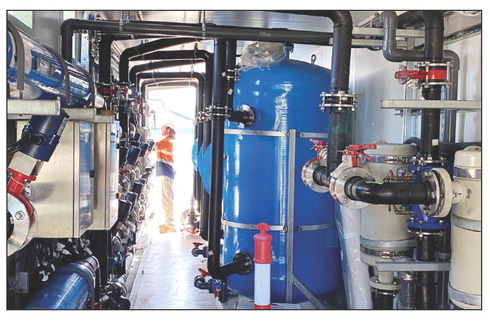
The City of Watonga turned to the OWRB for a $16 million loan in 2023 to retrofit its wastewater plant and build a drinking water facility. The move was forced on the city by the Department of Environmental Quality under a consent order, meaning the city had to remedy the drinking water nitrate levels and other issues or face ongoing fines. The drinking water plant, under construction on Weigle Avenue, is expected to come online in July.