
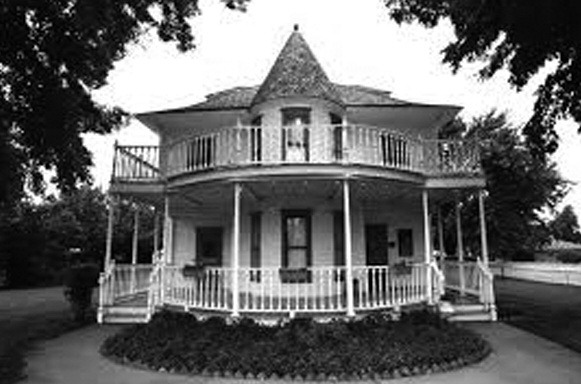
With the opening of the new location of Bank 7, a new era in the long history of banking in Watonga begins. I congratulate Bank 7 and appreciate both Bank 7 and First State Bank in Watonga for support of the Ferguson Home Museum. Banking in Watonga was not always so convenient nor safe as today. Mrs. Ferguson, in her book They Carried the Torch… notes that for the first two years of existence (1892-94), there was no bank in the new town of Watonga and monies had to be transferred 30 miles to a bank through bandit-infested hills.
The first bank established in Watonga was in 1894, the Farmer and Merchants Bank of Watonga. However, “the crash came in late September, when forged county warrants and protested drafts made their appearance.” “The owner could not face his son’s (who was left in control) dishonesty and disgrace. The owner shot himself, preferring death to the disgrace of his son, whom he had trusted and who became a fugitive from justice in foreign lands”.
“For the next four years, the town was without a bank. The Yeager and Black outlaws made their headquarter in the canyons and caves of the gyp hills a few miles north and east of Watonga and hold-ups were frequent.” I have previously written about efforts to evade theft of county tax funds by hiding the county’s money at various sites, including the Watonga Republican.
The Bank of Watonga, second bank in Watonga, was started by Mr. Ed Wheelock as president and C. R. Williams as cashier. “They opened for business in a small wooden building on Main Street, a part of the room being occupied by a grocery story. Notwithstanding their experience with the Farmers and Merchants bank four years previous, the new bank was given a hearty welcome by the citizens of the town. The equipment consisted of a fireproof safe, a homemade counter with nine dollars-worth of metal grill work on it, and two chairs, all of which was valued in their statement at two hundred and fiftyone dollars. The first loan was for $500 to be used in making a survey for a railroad from Kingfisher via Watonga to Alva. The Choctaw Northern came via Geary a few years later and stopped the prospects from Kingfisher. The bank was conducted most conservatively and soon won the confidence of everyone.” See also Bank Industry: Encyclopedia of Oklahoma History