
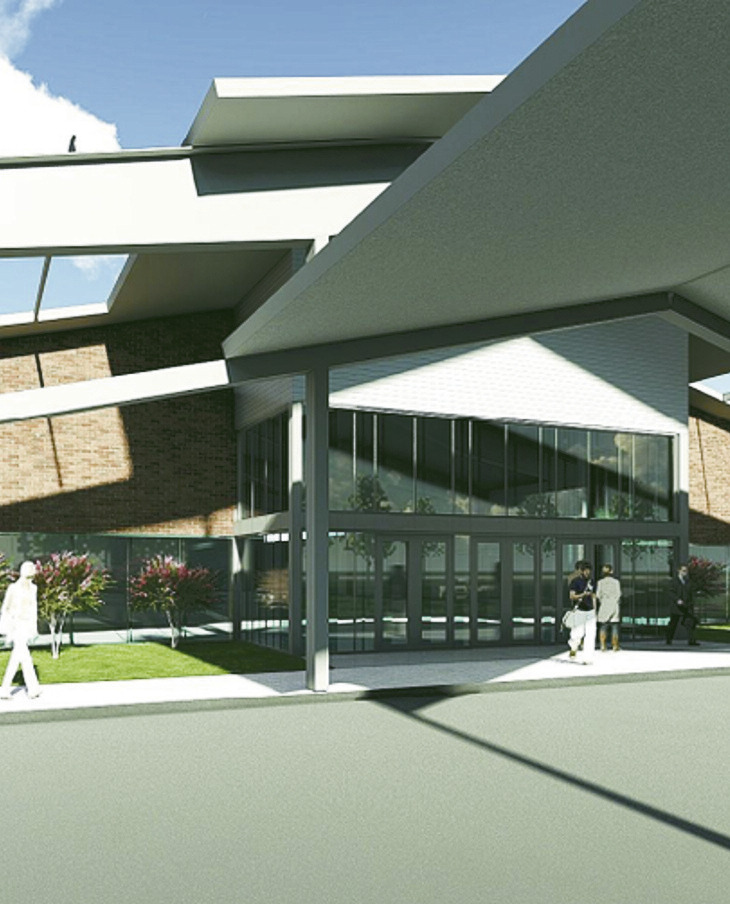
The Calumet school district has floated a bond issue to build a performing arts center.
The proposition went to Canadian County voters May 13. The bond is for $6.175 million, but the estimated cost to build and furnish the center is closer to $12 million. The remainder would be covered by an anonymous donation of $6 million.
The center could hold about 780 guests if they are seated in rows like a movie theater. That would be for performances and events like graduation.
If used for a banquet venue, seating capacity is closer to 550.
But why would the district, with fewer than 300 students, want to build something that large?
Superintendent Brandon Voss spoke to that question recently.
“We’ve seen how the metro continues to balloon,” he said. “Things are continuing to grow our way, and we want to prepare for that growth.”
One of the ballooning neighborhoods Voss could mean is Crimson Lake Estates, being constructed along Interstate 40 west of El Reno. Drive time from the planned neighborhood to Calumet is about 15 minutes. From the housing development to the Capitol is about a half hour drive. This puts Calumet, which has an excellent school rating on the report cards put out by the Oklahoma Department of Education, in the catbird seat as far as growth is concerned.
That growth, although moving toward the Calumet exit, will take a little time. Voss took that into consideration, too.
He said he didn’t want to build too small and have to readjust for increased student population inside the next 10 years. But he also knows the building is not just for the students.
“It could really be a community center,” he said. That might mean there could be concerts, plays, films and other uses for the art center until such a time as the space is needed for graduations.
A bond issue is similar to financing a car. The borrower – in this case the school district – needs the money in a lump sum to finance the construction. It promises to pay back the money using ad valorem taxes, a type of property tax.
Ad valorem taxes are set on valuation of property in the county or district. Because a bondissue seeking community is usually experiencing growth, the current residents and businesses often see no change in their taxation because there are more new businesses and residents who also pay taxes.
The bonds are sold through an agent to various institutions as an investment. Those institutions could include insurance companies, fund and stock brokerages, and banks. The institutions in turn sell them to their investors, who expect a safe, longterm investment. The interest paid on the money is capped by the bond agreement, often at or less than 10%.
As with all bond issues, the passage required a super majority of voters in favor of the issue.