
Perhaps you had a chance to attend to attend the American Legion Ceremony at the Watonga International Order of Odd Fellows Cemetery on Monday.
Perhaps you visited the grave of Watonga’s own Thomas Benton Ferguson, Jr, (Trad) the son of T.B. and Elva Ferguson.
“Trad” was a veteran of WWI. Trad, at 27 years of age, and already an accomplished newspaper editor and reporter, volunteered to serve in WWI and was commissioned as an officer in the U.S. Army.
Trad had just won his aeronautical wings through training at the Ft. Sill Army air field when he contracted influenza, sometimes known as the Spanish Flu in late 1918.
He, like many who contracted this infection, suffered the complication of bacterial pneumonia, 25 years before the discovery of penicillin. The infection proved fatal.
The triple tragedy is that Trad had only been married for six months when he died. The Armistice of the 11th hour of the 11th day of the 11th month of 1918 had already been declared.
According to the Center of Military History’s fact sheet on the U.S. Army in World War I, more than 50,500 U.S. servicemembers were killed in battle or died of combat wounds during the war. A severe new form of influenza killed about 55,322 U.S. servicemen in Army camps, on Navy installations and ships, and in the American Expeditionary Forces overseas.”
Symptoms included body temperatures up to 105 degrees, delirium, and as author Lynette Lezzoni puts it, coughing up of ‘pints of greenish sputum’.
Flu weakened the body’s defenses, often allowing secondary pneumonia, which caused most of the deaths, to invade, filling lungs with blood and other fluids and turning oxygen-deprived skin blue.
Influenza occasionally led to other respiratory conditions or severe complications such as meningitis, internal bleeding, and organ damage.
Some patients developed otitis media infection of the middle ear that was treated with puncture of the ear drum.
From Army History, spring 1919.
All of the influenza pandemics we have suffered since that time have their lineage in the 1918 pandemic strain. We are thankful for the influenza vaccine pioneered by the U.S. military and antiviral drugs for influenza.
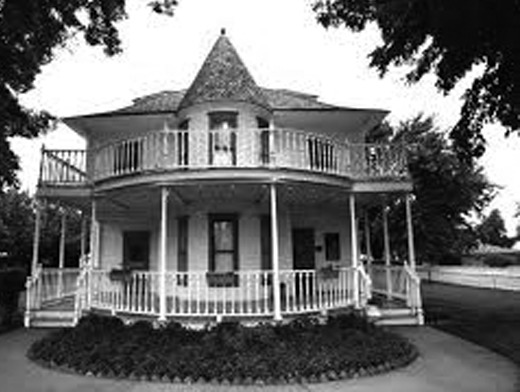
So, when you think of the Fergusons (visit the museum often), remember the sacrifice their son, Thompson Benton Ferguson, Jr. made for our country.