
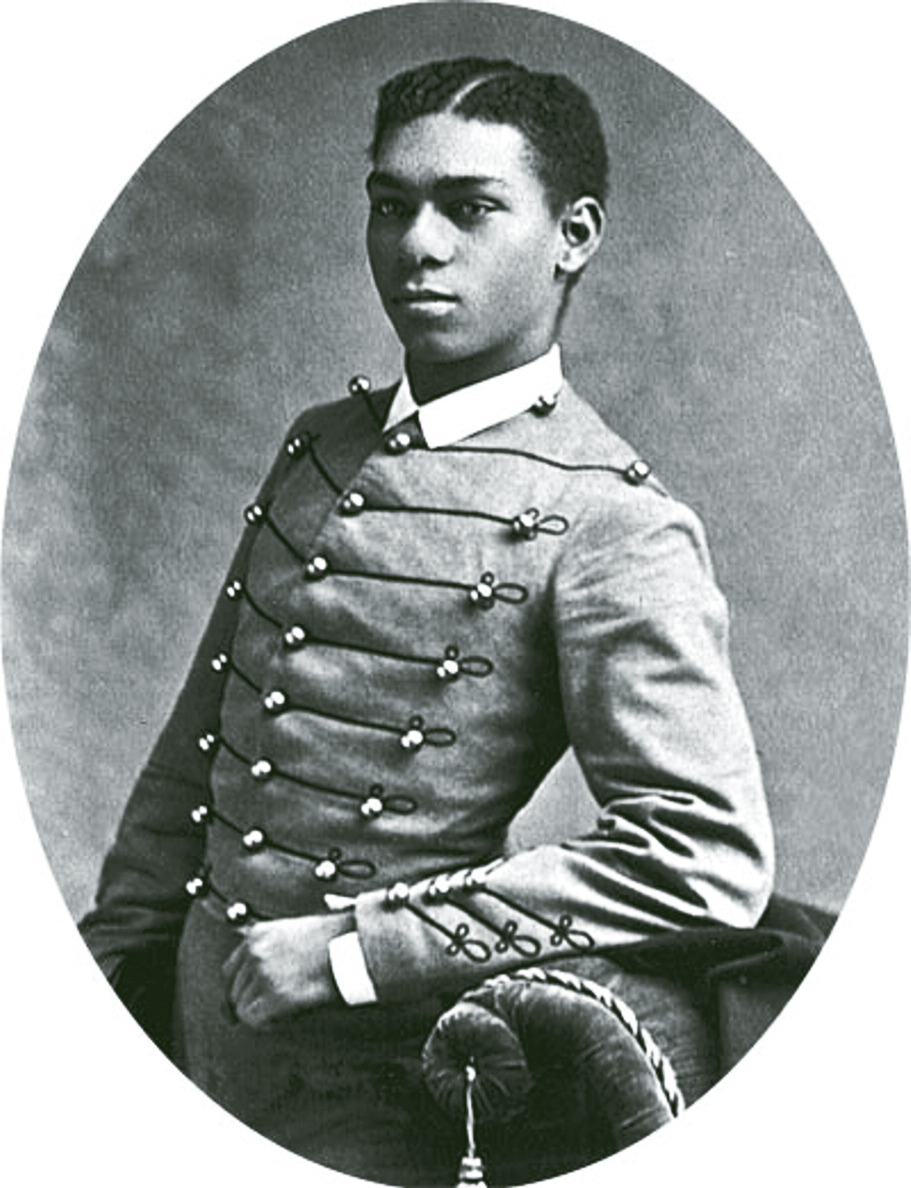
As mentioned in the Feb. 19 Ferguson Feature, two Black Army officers served in Western Oklahoma near, if not on the North Canadian River. They were Allen Allensworth and Henry O. Flipper. Flipper, the first Black graduate of West Point (1877), studied engineering, law and Spanish. Flipper, commissioned as a 2nd Lieutenant, was posted to the 10th Cavalry, a Black unit lead by White officers. He was stationed at Ft. Sill and Ft. Elliott in the Texas Panhandle.
While at Fort Sill, his first posting, he was tasked with solving a serious medical problem, malaria, which was sickening and killing many soldiers. He constructed a drainage ditch to drain a swampy area. His commanding officer was convinced the ditch ran uphill, but Flipper showed him with instruments it ran downhill. Flipper’s Ditch, as it became known, drained the swamp, and parts of the ditch can still be seen on the golf course.
He constructed a new road between Ft. Sill and Gainesville, Texas where supplies were accessed from a rail line. This road shortened the route by miles and was much better than a previous road. The contractor who needed the road for his horse-drawn freight wagons gifted Flipper with a barrel of highly prized items.
In 1879 Flipper served as Adjutant of the 10th Calvary at Fort Elliot, Texas, 27 miles west of the Indian Territory border. He constructed a 110-mile telegraph from Ft. Elliot to Fort Supply on the North Canadian River.
Then Flipper and the 10th Cavalry were detailed to Ft. Davis, Texas. There he led the 10th in the Apache Wars in 1879 and in pursuit of Victorio until Victorio was killed in Mexico in 1880. Flipper suffered with malaria/typhoid and was hospitalized at the Ft. Davis hospital. We visited Fort Davis National Historic Site last week and took a chilly tour of the hospital. There is an informative display of Lt. Flipper at the Ft. Davis National Historic Site Visitors’ Center.
When he was put in charge of the commissary, funds went missing and Flipper was unfairly discharged from the Army. His record was corrected many years later, and President Clinton pardoned him in 1999. Flipper went on to a career as an engineer, expert in mining claims, both in Mexico and the U.S., served as a special assistant to the Secretary of the Interior, and served the oil industry in Venezuela. He died in 1940.
Source: Black Frontiersman: The Memoirs of Henry O. Flipper. Compiled by Theodore Harris 1997.