
The House this week came together with the Senate and the governor to announce a historic education funding package. This plan includes $625 million in recurring revenue for public K-12 schools statewide, with $500 million going through the funding formula and $125 million for districts that have lower ad valorem bases. This portion will particularly help our rural schools meet basic infrastructure and maintenance needs, freeing other funding to meet other needs.
Included in this plan are $3,000 to $6,000 pay raises, depending on years of experience for every certified public school teacher in the state. Teachers also will have six weeks of paid maternity leave. This is for teachers in schools both on and off the funding formula.
An additional $10 million in one-time funding will go toward literacy instruction to ensure all students can read on grade level. One-time funding of $150 million will improve school safety allowing districts to hire school resource officers or upgrade security features, depending on need.
With the implementation of this plan, we will have poured more new money into public education in the last six fiscal years than in the prior 27 years combined: $1.45 billion from Fiscal Years 2019 to 2024 v. $1.37 billion from FY1992 to FY2018. And that's just new money, on top of our historic $3.2 billion appropriated to public education last year.
Included in this plan is a bill that will allow income tax credits for parents choosing private schools or homeschooling. I did not support this measure, but I'm glad there are safeguards in place in case of future revenue failures. Tax credits would decrease in proportion to any potential revenue cut.
I'm proud of our work to show our public schools and our teachers that we support them as they prepare our next generation for life and work outside the classroom.
In other policy, my House Bill 2239 is my only measure still pending action this session. The bill would establish a pilot program to address the red cedar infestation throughout the state, beginning with a concentration on the North Canadian Watershed. Because of it's estimated $3.2 million fiscal impact, the bill has been sent to conference committee.
On a final note, I want to give an update I recently received from the Oklahoma Department of Wildlife Conservation on repair work and renovation of the Watonga Lake dam in Roman Nose State Park.
Richard Snow, assistant chief of fisheries for the department, said a new contract is in place and work should restart soon. The delay was based on unforeseen problems uncovered after the project began in 2016. Dam repair and spillway renovations are now expected to be finished in late 2025. I know this timeline has been very disappointing, but I appreciate the significant investment in Roman Nose State Park. In addition, I would like to announce the reopening of The Lookout Restaurant at the lodge at 6 p.m. Tuesday, May 23.
Please remember, if I can help you with something, do not hesitate to reach out. You also can follow regular updates on my House Facebook page or call or email anytime at (405) 557-7407 o r Mike.Dobrinski@okhous e.gov.
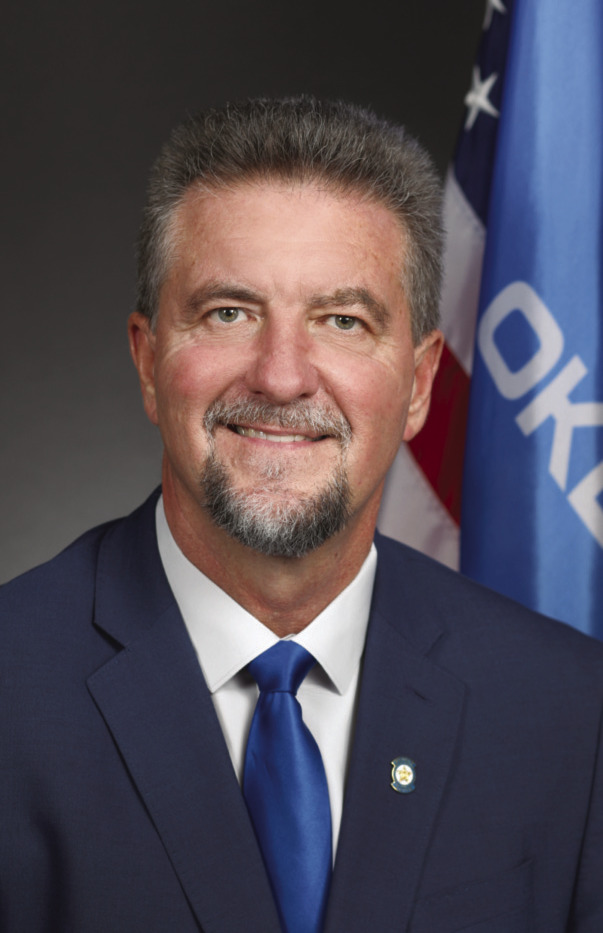
In your service, Mike Dobrinski Mike Dobrinski serves District 59 in the Oklahoma House of Representatives. His district includes Dewey and parts of Blaine, Garfield, Kingfisher and Woodward counties.