
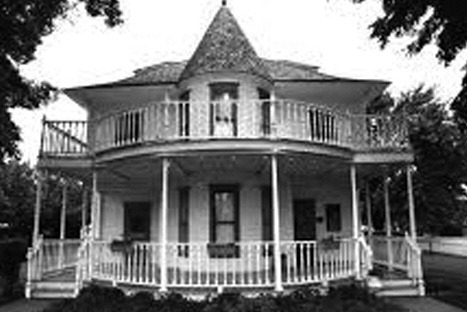
On Thursday, Nov. 13, the Friends of the Ferguson Home hosted the Plains Collective at the Ferguson Home Museum as part of Native American Heritage month and the inaugural meeting of the Living Traditions Series. Gordan Yellowman, a 1976 graduate of Watonga High School and now a nationally recognized artist along with Dee Cordry, an awardwinning author writing about the Cheyenne were on hand to explain the significance of their works. One of the points stressed by Albert Old Crow, the moderator, and Ramona Tallbear was the idea of breaking down barriers and misunderstandings.
Elva Ferguson in her book has a chapter “Indians on the Warpath” With the good relations the Fergusons had with native Americans, I feel the following must have been a major misunderstanding.
“While the Indians seemed harmless enough, they were bewildered by the restrictions thrown about them….Some years earlier the Cheyenne and Arapaho Indian tribes went on the warpath when they became displeased with the white man and his ways. With the arrest and imprisonment of one of their number (presumably at the Watonga/Blaine County Jail now at the Ferguson) the time again seemed right for the warpath trail.
They came silently nearer and nearer, surrounding the little unprotected frontier town (Watonga). The council fires were burning and the tom toms were beating, as the ball of fire sunk below the horizon. An Indian raid and possible a massacre had to be faced by the citizens. After dark the women and children were gathered together and placed in the big wooden courthouse (pre-1906) and surrounded by armed citizens as guards. Under cover of darkness an armed messenger mounted on a fleet footed pony was dispatched to Fort Reno, more than forty miles distant, for the detachment of soldiers to come to the rescue (Were these IX or X Cavalry Buffalo Soldiers?). But would they get there in time?
Those of us who watched and waited in the courthouse will never forget that night. All of the Indian massacres and horrors of which we had heard passed before us making the situation tense and full of anticipation, not knowing what minute the Indians might choose for striking. Along toward morning, the soldiers galloped into sight and what joy we experienced. Many of the old warriors in the tribes had on other occasions come into contact with Uncle Sam’s soldiers and knew how straight they could shoot. These Indians advised the members of their tribes to return peaceably to their allotments and learn white men’s ways. This was the last occasion that the town had any cause to fear the Indians. Howling Wolf was taken under heavy guard to another county and placed in jail.”
The impressive gathering at the Ferguson hosted by Roy and Janine Espy and members of the Friends of the Ferguson went a long way toward better understanding.
The next Living Tradition Series will take place December 4 at the museum and will feature James Black, a Cheyenne artist, and Wilbur Bull Coming who will speak about the symbols on the Cheyenne and Arapaho Tribal flag.