
The Sign.
It was propped up against a van across from the Senior Center on South Noble: A large metal sign with four attachment holes advertising the Ferguson Home Museum. The president of the Friends of the Ferguson Home, Connie Burcham, was the first to spot it. A vendor at the Bikes and BBQ in late April had it for sale for $100. The proprietor, Andy Barrett of Guthrie (no relation to Watonga’s Andy Barrett) had it for sale.
What was the story behind this important guide to the Ferguson Home Museum? As best he knew, Andy Barrett had purchased the sign from an antiques dealer. He supposed it was a sign from the Highway Department found in a ditch. While in fair condition with clear markings for the museum, it did have a square area of discoloration where apparently another sign had laid.
Various board members passed by including Mary Larson, the treasurer, Esther Arnold and Todd Lafferty and Joe Bryan. While it seemed a little odd to buy a sign that might rightly belong to the museum, we felt we had to have the sign and return to its rightful home at the Ferguson, so we paid a negotiated price.
Checking Ellen Shaw’s book, This Old House in Watonga, on page 22 I find that “in January 1974, the Oklahoma State Highway Department erected four beautiful signs on the highways leading into town from four directions”. Perhaps this sign was one of the four. In addition, I found “ A member’s son made six directional signs that a club member and her husband erected on streets within the city limits.” Some of these signs still exist.
Reading further, “From 1975 through May 1978, the club (Mother’s Self Culture Club), added six new signs directing visitors to the Ferguson Home. The cost of over $200 for the signs was borne by the club, but the Watonga Street Department installed the signs on city streets and on the highways leading into town.”
Two observations: The success of the Museum that led to it being recognized as the outstanding tourist attraction of Oklahoma for the year of 1981 by the Oklahoma Tourism Department was guided by a lot of signs (people) pointing it in the right direction. My second observation is that it takes a multitude of organizations pulling together to make a success. On pages 19-22, I count dozens of organizations, city, county and state government agencies and individuals who contributed to the success of Watonga’s museum.
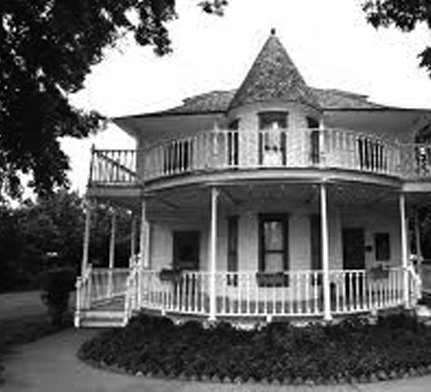
The sign, found in a ditch, claimed by an antiques dealer, sold by a traveling vendor from Oklahoma Territory’s capital where TB Ferguson served as governor, and returned home is a symbol of Ferguson Home Museum. This 1901 home may have seen better days since its 1972 major restoration and opening as a museum, but it will be found again and rise to its rightful, former glory.