
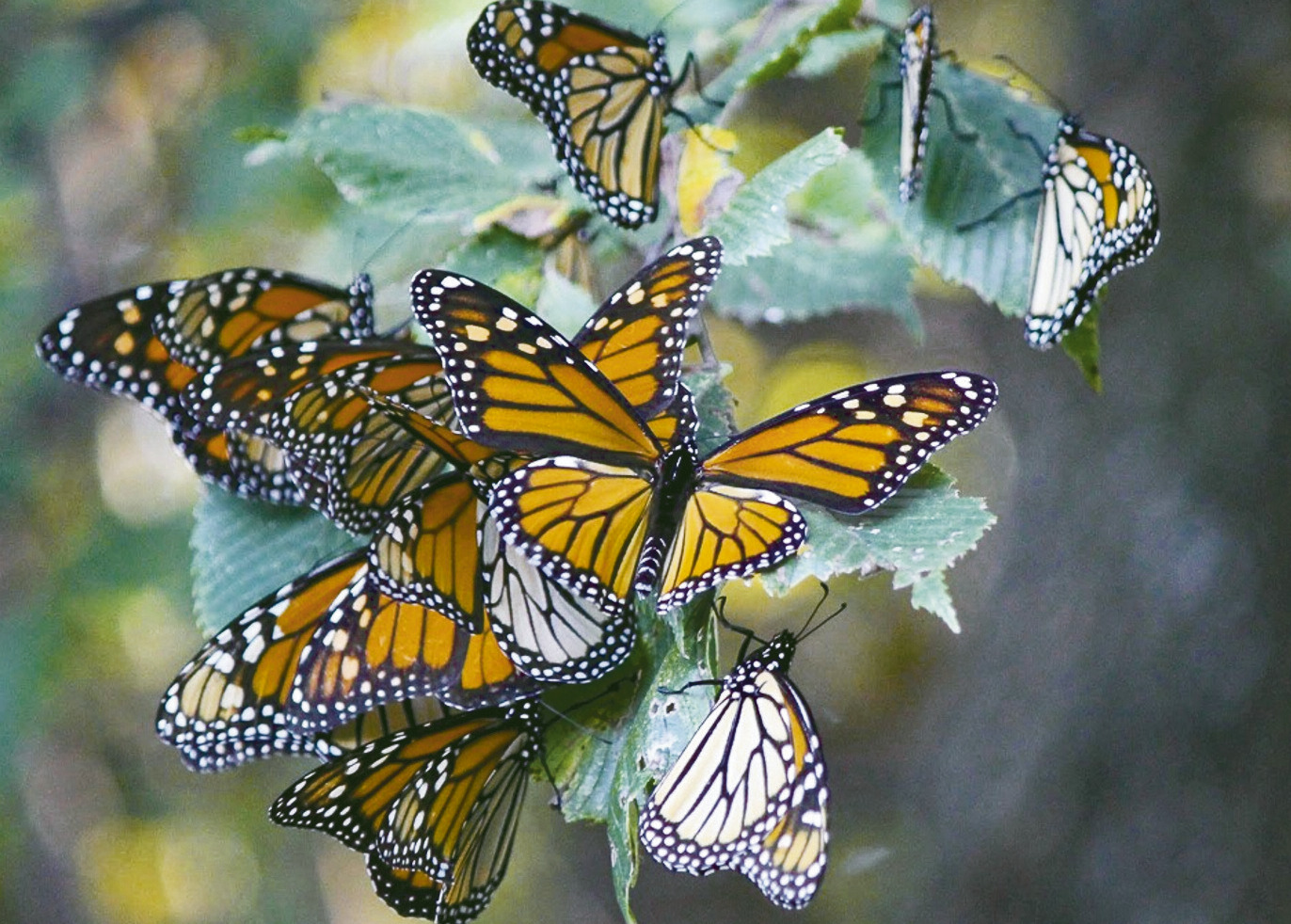
OKLAHOMA CITY – This fall, central Oklahoma residents were treated to stunning displays as thousands of migrating monarch butterflies paused to rest and feed, creating vibrant spectacles of orange across the skies and in trees. Those monarch butterflies have begun settling into their overwintering grounds at the Monarch Butterfly Biosphere Reserve in Michoacán, Mexico, after a remarkable migration south.
Local residents shared their admiration for the migration. Sonia Kirk of Oklahoma City recalled, “We moved to this home 30 years ago, and that fall I saw a burst of orange flying out of our mature pecan trees—probably about a thousand monarchs warming in the sun. This year and in 2018 were the largest roosts we’ve seen.” She added, “Seeing these annual roosts inspired me to focus on planting nectar and host plants—and to encourage friends to do the same. This fall has been amazing, with monarchs flocking to my Gregg’s mistflower, salvias, verbena, and cosmos.”
Carrie Oehlerich, a passionate pollinator advocate, shared her own experience: “I became a pollinator enthusiast about eight years ago after finding a monarch caterpillar on a new plant. Since then, I’ve encouraged people to plant milkweed and native flowers and skip pesticides. This fall, I saw monarchs in numbers I’ve never witnessed before—thousands across the creek. Walking into the dry creek bed and watching hundreds of monarchs float above my head was absolutely breathtaking. It felt spiritual—like a glimpse of what it must be like in Mexico.”
Sightings Strong, But Population Trends Remain Uncertain Despite these impressive sightings, the eastern migratory population of monarch butterflies has declined by approximately 80% since the mid-1990s, when systematic monitoring of their wintering colonies in central Mexico began.
“This was an exciting year for central Oklahoma,” said Katie Hawk, Executive Director of the Oklahoma Monarch Society. “Kaleidoscopes of monarchs were seen throughout the region. While this display was stunning, it doesn’t necessarily indicate an increase in population numbers—however, it does reflect the quality habitat available in central Oklahoma which had a nice boost in blooms and nectar from the precipitation we got this spring. Last year, the bulk of the fall monarchs migrated through western Oklahoma where wildflowers were lush.”