
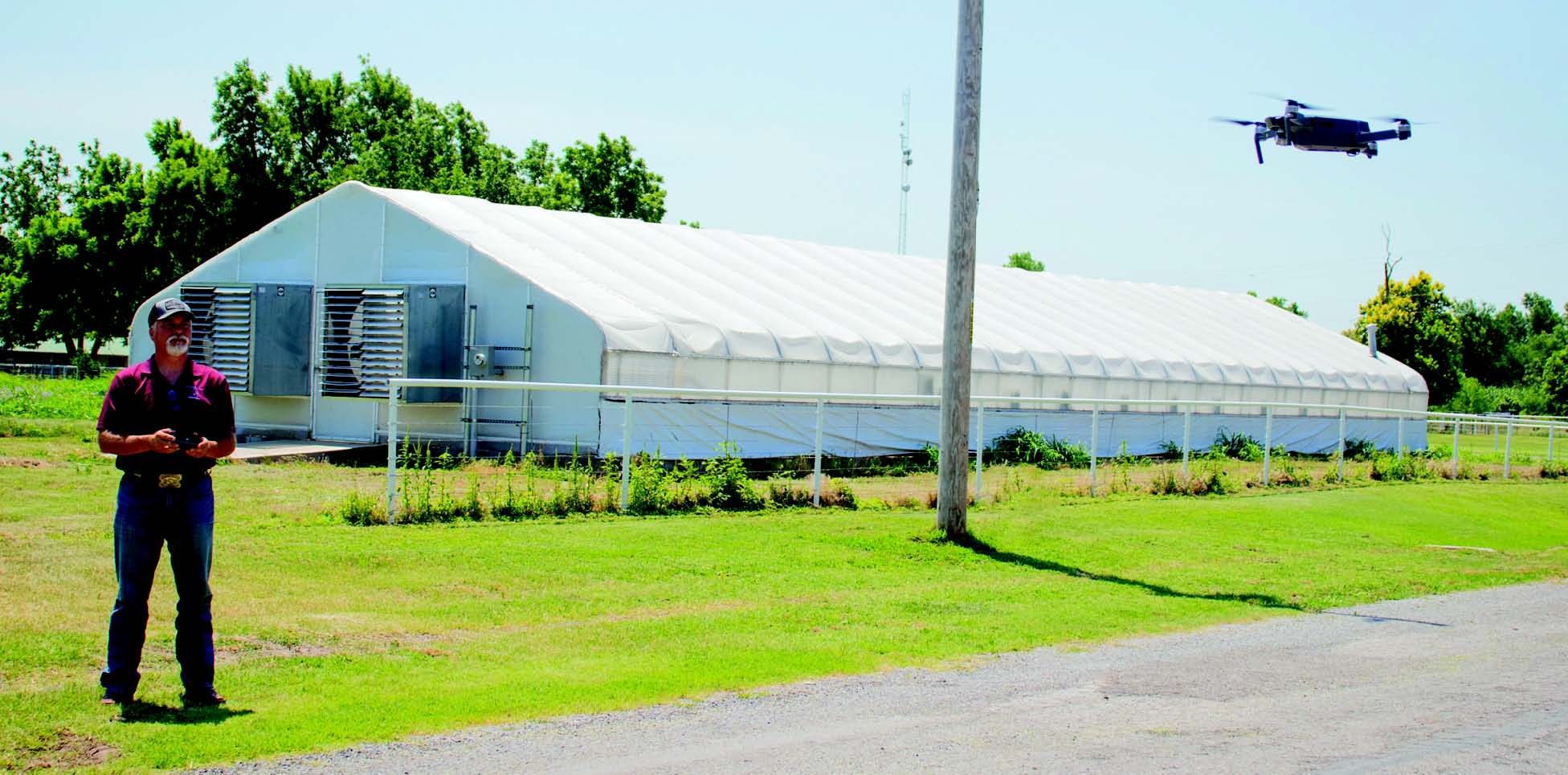
EL RENO, Okla. — This fall, Redlands Community College will offer new courses and two new agriculture degree options focusing on agriculture technology, thanks to a five-year grant totaling nearly $1.5 million dollars by the U.S. Department of Education.
Designed to expand opportunities to students interested in both agriculture and technology - Native American and low-income students especially - the courses will delve deep into tech that translates to agriculture, like applied automation, robotics, and drone operation. New advancements in technologies like computer vision software, drone technology and automation are transforming modern agriculture to address major issues like farm labor shortages, the rising population and healthier growing methods, and Redlands is on the forefront of training the new wave of tech-savvy farmers.
Dr. Julie Flegal-Smallwood, director of the NASNTI STEM (Native American Serving Non-Tribal Institution) program, said two degrees at Redlands Community College will address the burgeoning Ag Tech field this fall.
Agriculture Technology will be included as a degree option for an Associate in Science in Agriculture, as well as an Associates in Applied Science in Agriculture Technology and Sustainability. Key features of these degree tracks include the development of new courses in Drone Technology, Coding/Robotics, and GIS Mapping, along with other existing courses in sustainability, including Vermiculture Technology and Aquaponics.
“We will also be offering an embedded certificate in these degree plans. Individuals who are interested in Ag Tech are likely to be interested in non-traditional agriculture applications, urban farming, vertical farming, or working with technology instead of more traditional applications,” she said.
On Top Of The Trend
The new degree offerings at Redlands will benefit students who do not have access to traditional, family-based agriculture operations but who are interested in the overall area and contributing to its success. This includes urban students who don’t have land but want to provide for their families.
The grant is part of the Department of Education’s Native American Serving Non-Tribal Institution (NASNTI) program and is a capacity- building grant designed for Native American and firstgeneration, disabled, or lowerincome students. As part of this, the NASNTI- STEM grant already works to blend traditional sciences like chemistry and microbiology into the agricultural field through aquaponics and vermiculture. The college is also partnering with Native American groups around the state, and Flegal-Smallwood said she hopes the new agricultural technology courses will expand those relationships.
Ag tech is a growing field, as there is a global need to do more with less. Decreased use of water and pesticides and other chemicals has become desirable, but the need for access to affordable and culturally appropriate food sources increases. The demands of handling the global food supply is only growing, creating a need for more technology to make farming and livestock production more efficient.
“Agriculture has been a sector relying on traditional practices, many of them handed down for generations. But with ag tech, new inventions and techniques can be employed to keep the next generation ‘on the farm’ and successful,” Flegal-Smallwood said.
“At the most basic level, crop and livestock monitoring provides better decision-making tools.”