
Ask any Baby Boomer, Generation Xer or even early Millennial if they expected to one day always have a portable, handheld computer at the ready, and they would almost certainly say, ÒNo.Ó Although the first mobile phone was invented by Motorola engineer Martin Cooper in 1973, it would be decades before the initial incarnations of the modern smartphone were used by the masses.
The Pew Research Center reports that 98 percent of Americans now own a cellphone of some kind. That figure reflects an increase of 35 percent over the CenterÕs first smartphone ownership survey in 2011. The Canadian Telecommunications Association says 90 to 95 percent of the Canadian population uses a smartphone. WhatÕs more, many of these smartphones are synced to equally impressive smartwatches, ensuring that people are never without access to the vast array of apps that are such a big part of modern life.
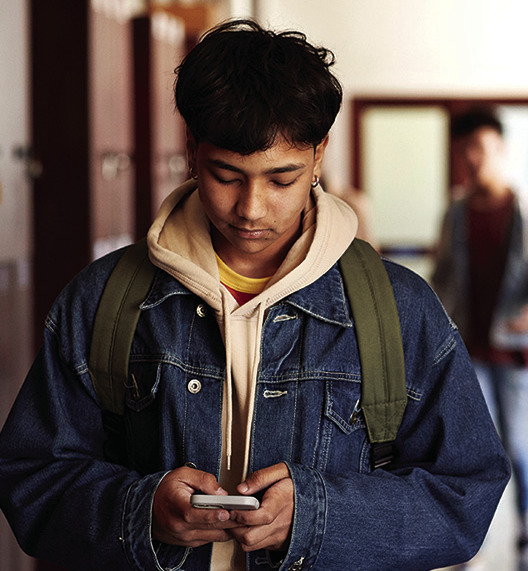
While this connectivity can be beneficial in many instances, smartphones have the potential to disrupt students in school settings. Many school leaders have raised concerns in recent years about student smartphone use in schools. Smartphones have become ubiquitous among tweens and teens since the first iPhone debuted in 2007. The Center for American Progress (CAP) reports that nearly 95 percent of tweens between the ages of 13 and 17 have access to a smartphone, up from 73 percent only 10 years ago. District policies regulating cell phone use in K through 12 schools have surged recently and made smartphone use in schools a contentious topic.
Various studies indicate that excessive time spent on cellphones by children negatively impacts academic performance. Paragon Health Institute reports cellphone bans can improve academic achievement, and there may be some indications that limiting cellphones in school can reduce behavioral problems.
Here is a deep look at how smartphones can affect students, courtesy of CAP.
¥ Cellphone use might negatively affect longterm learning retention.
¥ Teens check their phones hundreds of times a day, with many doing so during school hours. This can adversely affect their ability to concentrate.
¥ The United States Surgeon General Vivek Murthy issued an advisory about the impact of social media use on children and adolescents, calling for warning labels on social media apps. Many children access social media through their phones. Social media is designed to maximize user engagement, and many kids are becoming addicted to going on social media as a result of targeted content.
¥ Cellphone use makes it easier to cheat on tests. The National Education Association indicates approximately 35 percent of high school students admit to using mobile devices to cheat. Phones provide instant, discreet access to information that otherwise would be difficult to obtain.
¥ Phone cameras provide an unencumbered way to invade other students privacy. Phones can record video or take photos of students in intimate locations or without their knowledge.
Policies regarding cellphone use in schools remain a hot topic. While some school districts have implemented various usage policies, enforcement remains a gray area and some parents have even raised concerns that smartphone bans are a security risk. More research is needed to determine if and how cellphone usage impacts students while in school.