
Congratulations, Watonga, and the Watonga Republican for marking 135 years!
The Cheese Festival’s history isn’t quite that long, but the history of the cheese is deeper than 50 years.
There was a time when Watonga was synonymous with cheese and the very product that carried its name. More than 85 years ago, in 1940, an Iowa dairy businessman by the name of John Knudsen saw opportunity in the burgeoning town of Watonga. A farming stronghold way back then, Knudsen recognized that Watonga was home to a number of farmers who each had two to three dairy cows yet had nowhere to sell their milk.
At the time, there were cheese factories scattered around Oklahoma, but Watonga wasn’t home to one. Knudsen started one. In its earliest days, the factory made over 10,000 pounds of cheese a day– all by hand. Knudsen was later responsible for modernizing the factory and the created the recipe for cheese.
They hired local cheese makers to produce cheddar cheese. After collecting milk from local farmers, employees then crafted wheels and horns of cheese by hand. Farmers from as far as 150 miles away began to supply the factory with materials. In those days, Kraft was a major buyer of the product.
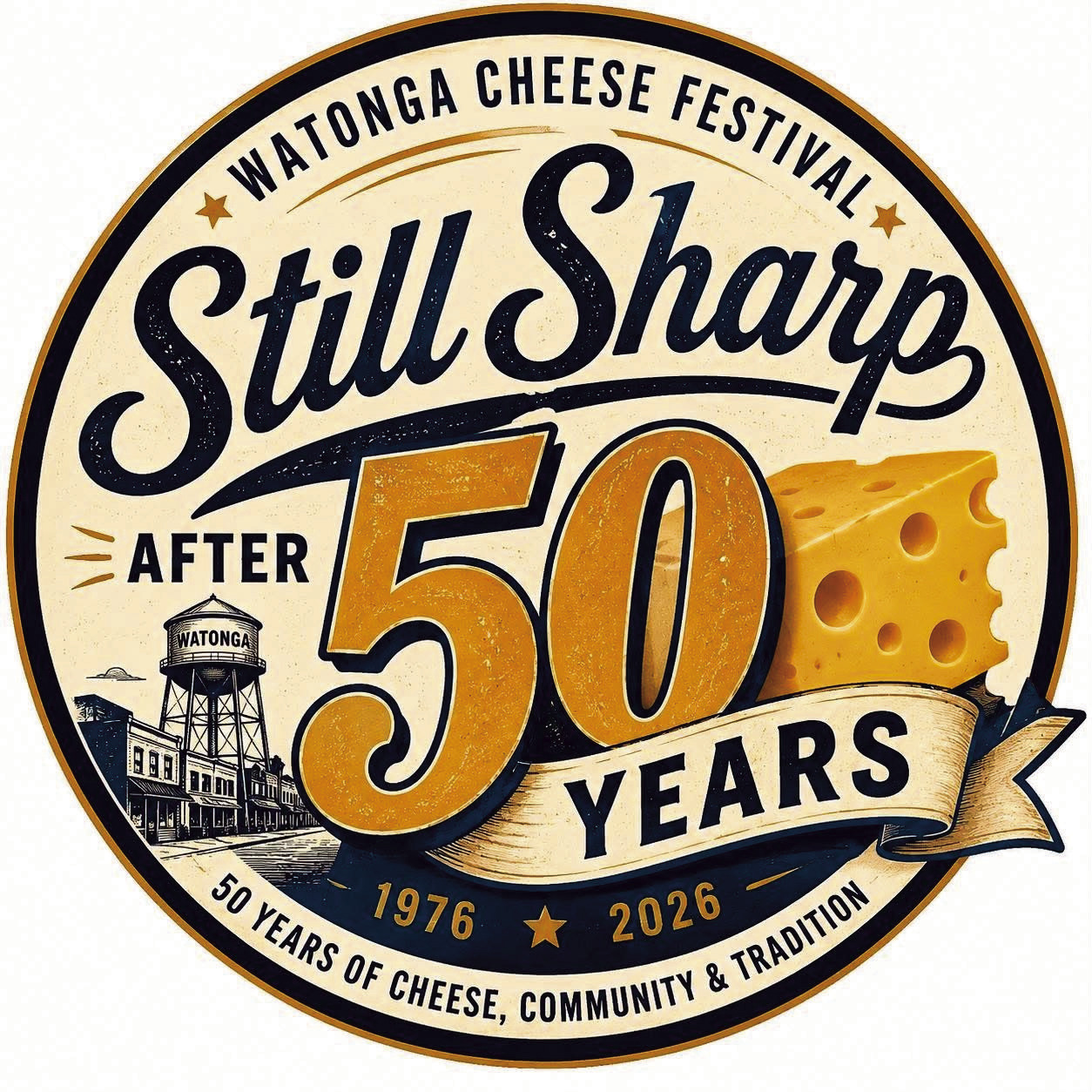
The factory then sold all its cheese to major producers – including Kraft – which then melted and repackaged the cheese. As operations ramped up at the factory, word began to spread about the local factory’s product quality, and more people began to buy Watonga’s local cheese. Some of the town’s older residents can still remember as children walking to the sales room to purchase the family’s weekly supply of cheese and other dairy products By the end of the 1940s, the factory was churning out over 50,000 pounds of cheese a week. From 1950 through the late 1970s, Watonga’s cheese factory went from being a word- ofmouth commodity to an absolute jugger naut, as the factory produced cheese every day of the week Eventually, Kraft stopped purchasing Watonga Cheese and began making their own cheese. The vendor change didn’t bother Watonga Cheese’s business as they had already begun to sell to local grocery stores and nearby stores in Enid and Oklahoma City. Building off the factory’s success, in 1976 the Watonga Chamber of Commerce and the company started the Cheese Festival to celebrate the success of Watonga Cheese.
Events like cheese tastings, cooking contests, art shows and races created a showcase for Watonga’s cheese prowess at the time. The festival’s biggest days were when it sprawled througho u t Watonga and spilled onto the Blaine County Fairgrounds.
In 1997, the Knudsen family made the decision to sell the company to a group of five investors in Oklahoma City. However, the new owners changed the original recipe, to the dismay of many consumers. Casey and Brandi Cowan purchased the factory in early 2002 and rebuilt the company, which was having difficulties after the Oklahoma City investors strayed from the original Watonga Cheese recipe.
Upon buying the factory, Casey spent months learning Wat onga Cheese’s original recipe and processes under the direction of its original cheese maker, Kenneth “Ice Water” Johnson. Under the tutelage of Johnson, the Cowans r turned to the factory’s original recipe, process and equipment as the cheese was once again being hand processed. Johnson continued to work at the factory until he passed away in 2003. However, his sons continued to work at the factory after his death, as the factory began to recapture its past success. Brandi and Casey operated the factory from their home in Balko and from a home in Watonga until 2007.
In 2007 Tropical Storm Erin brought 80mile-an-hour winds and 9 to 11 inches of rain to Watonga. As the August 22, 2007, edition of the Watonga Republican des cribed, “The roof was blown right off the Wat onga Cheese Factory and many other busi nesses and residences sustained roof damage, both from falling limbs and high winds along with heavy rains.”
Upon further inspection, it was discovered that the storm actually managed to twist the building’s foundation and cinderblock walls. The insurance adjuster condemned the building, estimating $650,000 in damages. And later, the USDA condemned approximately 7,000 pounds of cheese inventory.
According to the Cowans, the factory’s insurance settlement didn’t cover costs to rebuild, so a decision had to be made. After several months of looking for a new location to rebuild in and around Watonga, the Cowans received a number of business incentives from the city of Perryton, Texas, 170 miles away from the cheese’s namesake town.
In November 2009, the Cowans and Perryton, Texas, broke ground at the Watonga Cheese Factory’s new location over 2 ½ hours away from its origin. Six months later, the factory held its grand opening and it has operated from there since.
The condemned building sat as a ghostly reminder of Watonga’s yesteryears, used as a location for graduation photos and memories. After several years the remnants of the old Watonga Cheese Factory were reduced to a pile of rubble by bulldozers and backhoes.
The site is now the location of the new Blaine County Jail.
Now, all that remains is history. And the Cheese Festival.
It hasn’t been held every year. Once an incoming hurricane forced cancellation and who could forget 2020, the year of the pandemic? That means this is No. 50 for the festival. Changes have been made that could carry it another half century, with the infusion of time and talent from the Plains Collective.
Watonga Cheese can be found year-round in Watonga at Jacky’s Lawn & Lube, Circle K and Harp’s.