

One of the focuses of the House of Representatives this year is continuing our expansion of broadband internet throughout our state.
High-speed internet connection is important for a variety of reasons. During COVID-19 when schools closed, students needed this to participate in instruction and complete coursework. Many Oklahomans also benefitted from telehealth visits with their doctors. Even government went virtual for a time, hosting online open meetings so their work could continue as the public observed. Businesses also need broadband to provide services and support and deliver products to customers. Many also have discovered the benefits of remote-work policies.
In rural Oklahoma, however, too many of our residents lack a stable high-speed internet connection. An estimated 25% of the state’s population doesn’t have internet service at all.
The Legislature addressed this issue the past few years with legislation that created the Rural Broadband Expansion Council; created a $42 million sales and use tax rebate for new broadband equipment used to deliver service in unserved or underserved areas; and more.
This year, we continued our work passing House Bill 3363, known as the Rural Broadband Expansion Act. This proposes a plan to get 95% of Oklahomans' broadband coverage in the next five years through an office that would be fully funded with federal relief funds. This will allow us to establish broadband for 1.3 million people living in rural Oklahoma.
House Bill 3835 also passed the House this year. This was a collaborative effort between electric coops and internet providers that will allow providers to use the coop's infrastructure such as utility poles. This bill will benefit rural Oklahomans by giving them additional service options.
In addition to broadband, I want to mention my continued support for public education. The Senate president pro tempore this year authored a bill that would have created education savings accounts – basically vouchers – that would have taken public school funding and given it to families to use for private school tuition. We already have several options in state statute that allow families with children with special needs that exceed the capacity of their local school districts to qualify for scholarships that are funded outside of the school funding formula. We cannot afford to take away from our public schools. An additional argument is that in rural areas there are not the same options as in larger metropolitan areas, so this would have created another disparity between rural and urban kids. I'm glad this bill failed in the Senate, but because it's a pro tem bill we might not have seen the last of it. The Senate was pretty evenly split on this bill, and I know there's even less of an appetite for it in the House, so I certainly don't expect it to be pass, but I'll be watchful nonetheless.
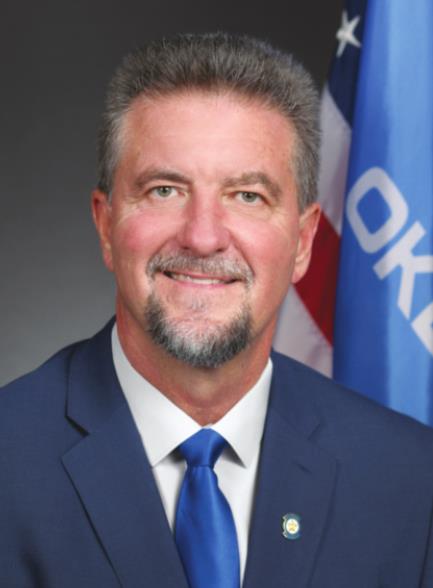
It's an honor to continue to represent the people of House District 59 in our state House. Please follow regular updates on my house Facebook page and reach out anytime at (405) 557-7407 or Mike.Dobrinski@okhouse.go v.
*Mike Dobrinski serves District 59 in the Oklahoma House of Representatives. His district includes Dewey and parts of Blaine, Canadian, Kingfisher and Woodward counties